Why Soup?
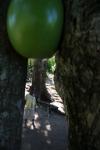
January 1st in Haiti is Independence Day and everywhere in the country Haitians drink pumpkin soup. Bourik (BOS) asks a few Haitian's about pumpkin soup's significance on this day.



January 1st in Haiti is Independence Day and everywhere in the country Haitians drink pumpkin soup. Bourik (BOS) asks a few Haitian's about pumpkin soup's significance on this day.
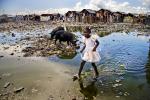 There is a Haitian proverb that says what the eyes can't see, the heart cannot feel. The United Nations Children's Fund (UNICEF) has selected their photo of the year, taken in Haiti. Below is an article Barbara Hans wrote about the photo in Der Spiegel Online. If you would like to see more photos of Haiti, take a look at the Haiti Innovation Flickr Site or a list of Haiti Photo Blogs (part 1 and part 2).
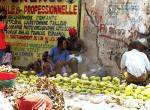 What a year. The soaring costs of food and fuel, political unrest, and natural disasters prevented any real progress toward food security. The international community tunes in and tunes out to Haiti’s struggle to feed itself. For now, there is attention. Two of the main tasks of the Haitian government and civil society in 2009 will be to begin reversing environmental degradation and reinvigorating the Haitian agricultural system. The challenges remain daunting, but are not insurmountable. There is much that we, as friends of Haiti, can do for a better year in 2009.
 Project Medishare, an NGO supporting medical and public health programming on Haiti's Central Plateau, has been awarded a $1.25 million grant through the U.S. President's Emergency Plan for AIDS Relief (PEPFAR). The award, which is focused on HIV/AIDS prevention activities, is part of a $4.8 million grant to Cross International, a South Florida-based interdenominational Christian humanitarian agency. Cross International has posted an announcement on their website as well.
 The New York Times recently carried an article on the Carter Center's joint Haiti/Dominican Republic initiative to eliminate malaria and lymphatic filariasis from the island of Hispaniola, which both countries share. Given that infectious diseases do not respect borders, this initiative seems an excellent opportunity for collaboration between Haiti and the Dominican Republic. Hopefully, it can open doors for much needed collaboration in other areas as well.
 The United States Institute of Peace is a nonpartisan, independent think tank (or at least as independent as possible given that it was established and funded by Congress.) Its goals are to help prevent and resolve violent international conflicts, promote post-conflict stability and development, and increase conflict management capacity, tools, and intellectual capital worldwide. The Institute has a Haiti Working Group, which meets monthly and is open to anyone interested in Haiti. The Group periodically publishes papers or organizes Haiti related events. Last week, the Working Group held a panel called The End of Poverty in Haiti.
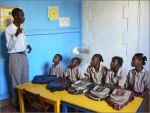 While being a child in Haiti is hard enough, being a disabled child is much more so. There are few organizations providing the health, education, and vocational support that disabled children and their families need. PAZAPA, based in Jacmel, has been supporting programming for deaf, blind, and developmentally disabled Haitian children since 1982. We first wrote about PAZAPA on October 13th. Below is an update.
 Caribbean 360 carried an announcement that, by early next year, Haiti will have taken a step toward closer integration into the Caribbean Community (CARICOM) Single Market and Economy. As part of this deal, CARICOM will carry out public education campaigns to educate Haitains about CARICOM and to educate other Caribbean countries about Haiti. The expansion of Digicel, the largest company in Haiti, shows the potential of the private sector in Haiti. Haiti needs trade more than it needs aid and I hope regional integration will help create much needed employment.
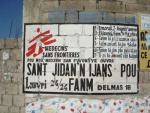 There is a Haitian Proverb, “fanm se poto mitan.” It means that women are the central pole of life, they support society. Sadly, the maternal clinics in Port au Prince are not able to support the numbers of pregnant mothers seeking a safe facility to give birth in. Jacqueline Charles of the Miami Herald describes the under-resourced hospitals, their over-worked staff, and the negative impact on the health of women and children. As Paul Farmer notes in the article, ``…If you are really serious about reducing maternal mortality, you have to stay in the game a long time.'' You can read this and other Haiti related stories on the Miami Herald website. Then take a look at the short video and photos that convey the gravity of the situation.
 Monday marked the 20th global observance of World AIDS Day. Each year, this date provides an opportunity to reflect on what has been accomplished and what remains to be done. Haiti's significant and under recognized progress in its struggle against HIV/AIDS continues. In fact, Haiti's successes have been replicated in numerous countries throughout Sub-Saharan Africa. This is something that we can all be proud of. Below are some thoughts concerning World AIDS Day 2008.
